Short Answer
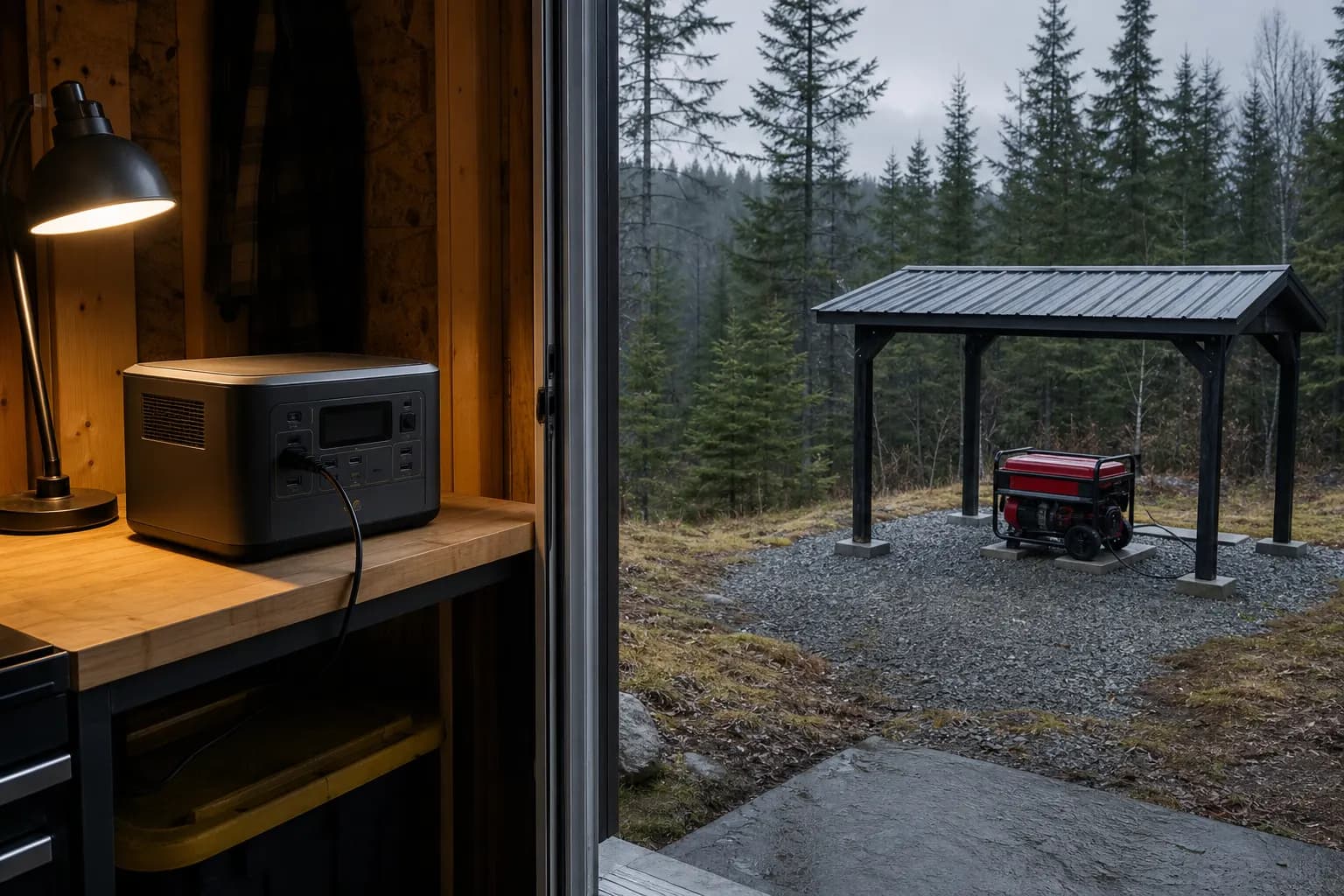
For most apartments, condos, and light home backup needs, start with a portable power station. It is the better fit for indoor use, phone charging, routers, lights, laptops, and small devices.
For heavier outage loads, a fuel generator can provide more continuous power, but it comes with a much higher safety burden. A portable fuel-burning generator must be operated outdoors, away from buildings, doors, windows, and air intakes. It should never be used indoors, in a garage, in a shed, in a basement, on a balcony, or plugged into a wall outlet.
The practical Canada Ready Home rule:
- Choose a portable power station for indoor battery backup and lighter loads.
- Consider a fuel generator only if you can run it outdoors safely, store fuel safely, handle noise and maintenance, and use proper electrical connections.
- Get qualified help before connecting any generator to home wiring.
If you are comparing battery sizes, use the watt-hour calculator, then read the best portable power stations in Canada buyer guide for the current product shortlist.
Safety Comes First
The biggest difference is not wattage. It is carbon monoxide.
Health Canada says carbon monoxide has no smell, taste, or colour and can only be detected with a carbon monoxide alarm. Fuel-burning equipment can produce carbon monoxide, including gasoline generators.
The Government of Canada says portable fuel-burning generators should be operated at least 6 m (20 feet) from homes or buildings, with exhaust directed away from open windows and doors. It also says a backup generator may only be connected to a home's electrical system through an approved transfer panel and switch installed by a qualified electrician.
Battery or solar-powered portable generators do not produce carbon monoxide during normal use. That makes them a much better fit for indoor lighter-load backup, but they still have limits around charging, temperature, output, storage, and manufacturer instructions.
Quick Comparison
Portable Power Station
- Indoor use: useful indoors for battery backup when used according to manufacturer instructions.
- Carbon monoxide: does not produce carbon monoxide during normal battery use.
- Best fit: phones, routers, lights, laptops, radios, and small electronics.
- Main limit: finite watt-hours and an output ceiling.
- Apartments and condos: usually the realistic choice.
- Home wiring: usually powers devices directly unless you have a professionally designed system.
Fuel Generator
- Indoor use: do not use indoors, in garages, sheds, basements, or other enclosed or partly enclosed spaces.
- Carbon monoxide: produces carbon monoxide and needs outdoor placement plus working CO alarms.
- Best fit: heavier loads, longer outages, and some tools or appliances when sized and connected correctly.
- Main limit: safety, fuel storage, noise, maintenance, and outdoor operation.
- Apartments and condos: usually impractical or unsafe because outdoor placement and fuel storage are difficult.
- Home wiring: needs approved transfer equipment and a qualified electrician if connected to home wiring.
When A Portable Power Station Makes More Sense
Choose a battery power station first if your outage plan is mostly about communication, light, and small electronics.
Good fits include:
- phones and tablets
- internet modem and router
- LED lights
- laptops
- battery radio
- small fan
- camera or communication gear
- small medical-adjacent electronics only after checking manufacturer requirements
Battery stations are especially useful for renters, apartments, condos, townhomes, and homes where safe outdoor generator placement is not realistic.
The tradeoff is capacity. A compact EcoFlow RIVER 2 class station is around 256 Wh and 300 W output. A mid-size Anker SOLIX C1000, Jackery Explorer 1000 v2, or BLUETTI AC180 class station is closer to the 1 kWh range, but it is still not a whole-home backup system.
Before buying, check:
- rated watt-hours
- continuous AC output
- surge output
- output ports
- charging time
- battery chemistry
- operating temperature range
- warranty and seller
- exact model, current listing, and availability
For product examples, use the portable power hub and the portable power station buyer guide. Check current prices and Amazon.ca availability before buying.
When A Fuel Generator Makes More Sense
A fuel generator may make more sense if you need heavier loads, longer run time, or backup for equipment that is not practical on a small battery station.
Possible fits include:
- a detached home with safe outdoor placement
- a cottage where the generator can sit far from buildings, doors, windows, and vents
- longer outages where fuel storage and refuelling are planned
- loads that exceed a portable battery station's output limits
- home wiring only with approved transfer equipment installed by a qualified electrician
The tradeoffs are serious:
- carbon monoxide risk
- fuel storage and refuelling risk
- noise
- maintenance
- weather exposure
- outdoor theft/security concerns
- extension-cord and transfer-switch safety
- neighbourhood or strata restrictions
Do not buy a fuel generator just because it has more watts on paper. If you cannot run it safely outdoors and connect it safely, it is the wrong solution.
Canada-Specific Use Cases
Apartment Or Condo
A portable power station is usually the practical option. A fuel generator is usually not a fit because you may not have a safe outdoor location, fuel storage, or permission to operate it. Balconies and garages should not be treated as safe generator locations.
Detached Home
Both options may be possible. Start by deciding whether you need light indoor battery backup or heavier outdoor generator backup. For whole-circuit backup, speak with a qualified electrician before buying equipment.
Cottage
Cottages can make fuel generators tempting, but they also increase the risk of poor placement near cabins, sheds, bunkies, decks, and open windows. Keep carbon monoxide alarms working and follow generator placement rules. A battery station may still be better for night-time phone, light, and router loads.
Fridge Or Freezer Backup
Do not size fridge backup from marketing copy alone. Fridges cycle on and off, compressor surge matters, and a closed full freezer can stay frozen for a limited time if the door remains closed. Compare the appliance's actual requirements before assuming a battery station or generator is enough.
Medical Or Safety-Critical Loads
Do not rely on a general buyer guide for medical-device backup, refrigerated medicine, powered mobility equipment, or life-sustaining equipment. The Government of Canada recommends making a power outage plan for medical devices and critical medication. Speak with the device manufacturer, health provider, or relevant support program.
Capacity And Runtime
Battery stations are sold by watt-hours and output wattage. Fuel generators are usually compared by running watts and starting watts.
For a battery station, a simple planning estimate is:
- List each device.
- Find the wattage.
- Multiply watts by hours.
- Add margin for inverter losses and real-world use.
- Check that the station's continuous and surge output can handle the load.
Use the watt-hour outage guide for a calmer walkthrough.
For a fuel generator, do not stop at "watts." Check fuel type, runtime at load, starting watts, extension cord rating, transfer switch requirements, noise, oil changes, storage, and the manufacturer's safety instructions.
What Not To Do
Do not:
- run a fuel generator indoors
- run a fuel generator in a garage, shed, crawlspace, basement, or partly enclosed area
- run a fuel generator on a balcony
- aim exhaust toward doors, windows, vents, or air intakes
- plug a generator into a wall outlet
- use underrated extension cords
- assume a battery station can run heaters, kettles, microwaves, sump pumps, or fridges without checking surge and runtime
- plan medical-device backup from a general shopping article
- rely on old Amazon.ca prices without checking the current listing date
Recommended Starting Point
For Canada Ready Home, the safest default recommendation is:
- Start with a portable power station if the goal is indoor backup for phones, routers, lights, laptops, and short outages.
- Move to a fuel generator discussion only when the load is too large for battery backup and the household can satisfy outdoor placement, fuel, maintenance, noise, and electrical safety requirements.
- Use professional help for any connection to home wiring.
This comparison should send most apartment and condo readers toward a battery station, and most whole-home backup readers toward a qualified electrical/generator conversation rather than a quick Amazon.ca purchase.
FAQ
Is a portable power station the same as a generator?
Retailers sometimes use "solar generator" for a battery power station, but it is not the same as a fuel-burning generator. A battery station stores electricity. A fuel generator burns gasoline, propane, diesel, or another fuel to make electricity.
Can I use a portable power station indoors?
Yes, battery power stations are commonly used indoors for lighter backup loads, and the Government of Canada notes that battery- or solar-powered portable generators do not produce carbon monoxide. Still, follow the manufacturer's instructions for charging, ventilation, temperature, storage, and load limits.
Can I use a gas generator indoors if the window is open?
No. Do not use a fuel-burning generator indoors or in a garage, shed, basement, crawlspace, or partly enclosed space. Open windows do not make indoor generator use safe.
How far should a fuel generator be from the house?
The Government of Canada says to plan for at least 6 m (20 feet) from homes or buildings, with exhaust directed away from open doors and windows. Also close doors and windows near the generator.
Can I plug a generator into a wall outlet?
No. The Government of Canada says never to plug a generator into a wall outlet. A backup generator may only be connected to a home's electrical system through approved transfer equipment installed by a qualified electrician.
Which is better for an apartment?
Usually a portable power station. Fuel generators are usually not realistic for apartments because safe outdoor placement and fuel storage are difficult or prohibited.
Sources
- Government of Canada: Power outages - Get prepared
- Health Canada: Carbon monoxide overview
- Health Canada: Carbon monoxide - preventing exposure
- EcoFlow Canada: RIVER 2 portable power station
- Jackery: Explorer 1000 v2 portable power station